Phoenix’s Story: A Family’s Journey Toward Healing & Hope
By Darius Griffin
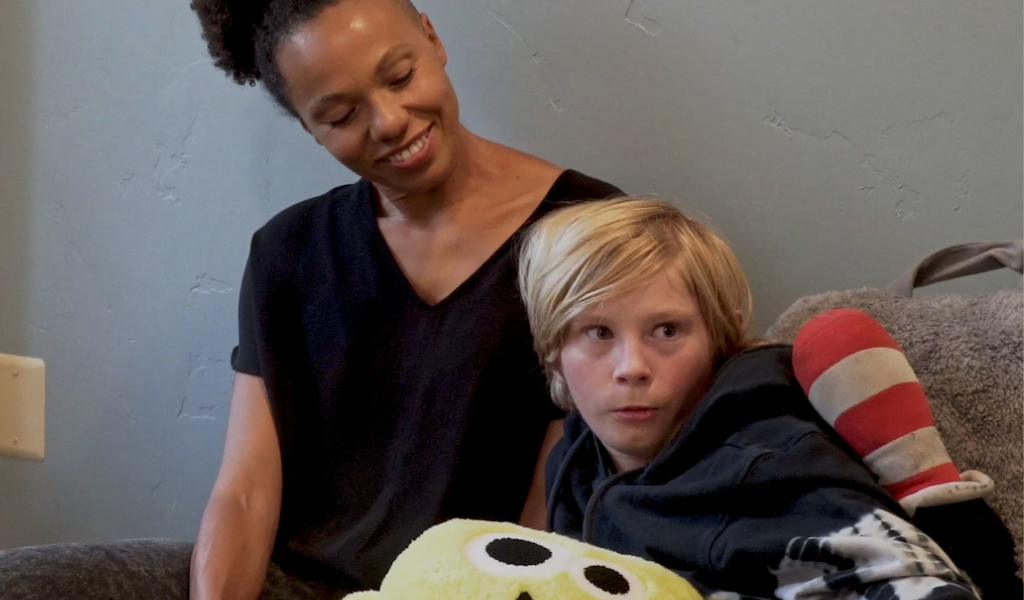
For some families, there comes a moment where it feels impossible to do it all alone. In the Barnes household, that moment arrived earlier than expected for their son Phoenix. As his emotions became larger and harder to manage, the family found themselves reaching the limits of what they could handle. “He needs help, we need help,” Alisa recalls saying, a realization that changed everything.
Phoenix joined the Barnes family back in 2014, as Alisa and her husband Derek’s first ever foster placement. After spending the beginning weeks of his life in the NICU, Phoenix struggled with attachment and only associated being held with feeding.
“It took a really long time for him to understand that I’m holding you because you’re a baby,” Alisa said. “You’re not supposed to be in a bed by yourself.” She remembers constantly wearing him in a wrap, helping him slowly learn what it meant to be held out of comfort rather than necessity. While this worked at a young age, as Phoenix grew, so did the challenges he faced.
RELATED | Explore Seneca’s behavioral health services
As new challenges arose, the Barnes family noticed that Phoenix’s emotions sometimes escalated quickly, making it hard for him—and them—to understand. That’s where Seneca enters the picture. After being referred to one of our outpatient clinics, the family began working with Seneca’s team to create better systems to identify and support Phoenix’s needs.
Seneca’s outpatient programs are designed to support youth impacted by trauma, anxiety, depression, and other complex challenges, meeting them wherever they are: in the clinic, in schools, in the community, online, or—like in Phoenix’s case—right at home.
Watch Phoenix’s story:
Once referred, Phoenix and his family began working with Hunter Lew, LMFT and lead clinician, in whatever setting felt the most comfortable. “We’re not just in the clinic,” Hunter explains. “Sometimes our clinic is going out into the community, to schools, to homes in order to meet children’s needs and family’s needs.”
For the Barnes family, coming directly to the home and working with Phoenix in his everyday environment made all the difference. This whole-family approach allows room for deeper understanding, more personalized support, and helps ensure everyone is set up for success.
Another key figure in Phoenix’s journey was clinician Lorin Davi, who used play-based strategies to help him express emotions that were too big or complex to articulate verbally. Many young children communicate through play long before they can communicate through words. Using games like Candy Land, Uno, and Jenga, Lauren helped Phoenix build emotional literacy—naming feelings, practicing coping skills, and exploring how his body responds to stress. Play therapy created a safe, low-pressure environment for Phoenix to practice emotional regulation and connection. This approach unlocked progress that traditional talk therapy alone couldn’t achieve and helped him further trust the adults supporting him.
RELATED | Contact us to get the support you need
Over time, the Barnes family began to see meaningful changes. Today, Phoenix is thriving in ways that once felt far out of reach. He’s gotten more confident in expressing his needs, more secure in his relationships, and more able to navigate difficult moments.
“When you see a child make the connection that they’re safe,” Derek explains, “you know we’re doing something good here.” Phoenix’s story is a reminder of just how powerful it can be when families ask for help—and when organizations meet them with Unconditional Care.
At Seneca, we believe every child deserves to feel understood, and every family should have access to the support they need to make that happen. If you’re interested in learning more about our programs or the many ways you can support youth and families in your community, don’t hesitate to reach out. Healing doesn’t happen alone—and together, we can help more children like Phoenix find the stability and connection they deserve.
Ensure children like Phoenix get the expert support they need by making a donation today.