What are Seneca’s Employee Resource Groups (ERGs)?
By Darius Griffin
When people first encounter Seneca, they usually learn about our work in behavioral health, education, and permanency across California and Washington. What’s not always visible is how Seneca operates inside the organization to support the people who make our mission possible. Over the years, we’ve learned that a mission centered on Unconditional Care must also be reflected in the way we treat one another as colleagues. Employee Resource Groups (ERGs) have become one of the clearest expressions of our belief that a culture of care must start from within our own workforce.
Employee Resource Groups (ERGs) are voluntary, employee-led spaces where colleagues connect around shared identities and lived experiences. These groups help build belonging, strengthen representation, and ensure that staff voices inform our workplace practices. As Program Director and Caregivers ERG Facilitator Gini Sanders explains: “ERGs give staff a place to be seen and heard, to learn from colleagues with shared experiences, and to bring forward insights that strengthen our culture and our work.”
Each ERG carries its own vibe, but all groups carry the belief that employee perspectives are essential to shaping a healthy and inclusive workplace.
In an organization as large and geographically spread out as Seneca — with teams working remotely, in the field, and across multiple regions — ERGs become a great way to bridge the distance between programs. They give people who may never work in the same office or even in the same state, an opportunity to build real relationships, share resources, and process the challenges of emotionally demanding work.
“I found a group of people who shared similar experiences and understood parts of my work and life without a lot of explanation.” Gini said. “It is so nice to be surrounded by people who are frequently nodding in agreement with your experiences or saying things like I get that.”
These groups go beyond job titles and allow for deeper conversations that help reduce stigma in the workplace.
While ERGs are considered social spaces, they are also very important in informing how Seneca shapes its internal policies. Facilitators and members regularly share feedback with Human Resources and leadership, helping shape policies, language, and practices that better reflect the needs of our workforce. Feedback from ERGs has influenced countless aspects of our workplace — from how we affirm our autistic and neurodivergent colleagues, to crafting respectful language in recruitment materials, and so much more! These groups help Seneca listen intentionally and translate that listening into meaningful action.
RELATED | How James Baldwin Academy (JBA) is Supporting Students Beyond the Classroom
ERGs at Seneca are intentionally structured to be welcoming and simple to join. The first step is for staff to reach out to the facilitator of a group that resonates with them. Facilitators will share when the ERG meets and how new members can plug into upcoming meetings. Some employees attend regularly, others drop in when their schedule allows, and many use the groups to meet colleagues outside their immediate team. Whether someone works from home, in the community, or inside an office, ERGs help ensure there is always a place to connect with people beyond the day-to-day workflow.
“I think a great part of ERGs is that they are designed to be welcoming spaces where you can show up as you are. Want to keep your camera off? Great. Want to contribute in the chat only? Super. Can only join for 20 minutes? Yes! We welcome all ways of participation and engagement, and the job of the facilitator is to lead the conversation and create a space that feels safe and comfortable for others to share, learn and support,” Gini adds.
Seneca currently offers a wide range of Employee Resource Groups that reflect the full diversity of our workforce. Here is the complete list of ERGs along with brief descriptions:
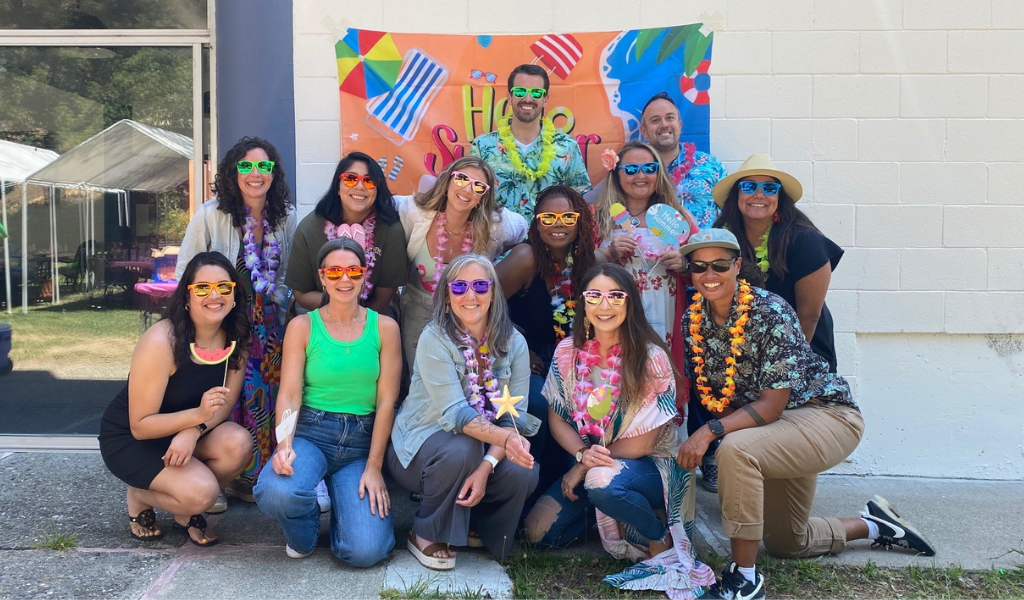
Seneca’s Employee Resource Groups are open to everyone and show what has always been true about our mission: Unconditional Care starts with the people who deliver it. These groups connect colleagues across counties, hybrid schedules, and varied identities while helping inform the policies that guide us internally as an organization. Thank you to our ERG facilitators and members who continue to shape what it means to work here at Seneca and how care shows up in our work every day. For applicants exploring a role with us, and for current staff brushing up on their workplace knowledge, visit our Careers page for more information.
Communications Specialist